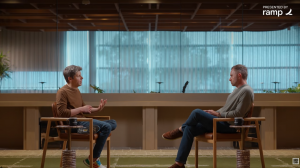
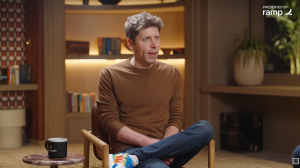
Sam Altman sat down with David Senra to talk about AGI, OpenAI’s origins, and where the technology goes next. But scattered through the conversation, sometimes between the lines and sometimes said outright, are immediately useful insights for tech founders. A working theory of how to choose an idea to build, coming from someone who has judged bets from both ends of the table. Altman started as an investor before running a company, so what follows is pattern recognition from thousands of pitches, applied to his own highest-stakes decisions.
1. The best ideas are newly possible and unappealing
The clearest expression of his filter in the whole conversation, and he delivers it almost in passing while talking about AI labs. The ideas he always wanted to fund as an investor, and the ones that mostly worked for him, share two properties at once: they only became possible very recently, and they do not yet look like good ideas to anyone sensible.
Both halves are load-bearing. If the idea was buildable three years ago, someone has tried it, and the ground is picked over. If it already looks good, the crowd has arrived, and your edge is gone. The uncomfortable middle, possible but unappealing, is where he says the returns live.
The practical test for founders: name the specific capability jump your idea depends on, the thing that is making it buildable now, and how long ago its buildability was a no-go. If the buildability only became possible very recently, you might have half the makings of a great idea. Next, ask how the idea looks to your builder and founder peers, even investors in your network. If it already looks obviously good, others have seen it too, and the edge is gone. If they find it unappealing in the moment, you have the raw shape of the kind of bet he describes.
2. Size the win, not the odds
Altman’s approach to OpenAI’s AI research program is close to the way he invested: assume most bets die, and make sure the ones that live are enormous. He describes the power law as something you have to force on yourself because human intuition resists it. Your best bet returns more than everything else combined, and your second best returns more than everything after that.
The rule he draws from it is simple: high-risk bets are fine, as long as you only take the ones that are extremely valuable if they work.
For a founder, this flips the screening question. Most of us evaluate ideas by asking whether they will work, because survivability is what we can picture. He asks what it is worth if it works, and accepts a low hit rate as the cost of admission. One caveat he does not make, so we will: he has a portfolio, and you probably have one shot. For a single bet, the power law logic means choosing the idea whose ceiling justifies years of your life, then resisting the urge to hedge it into something safer and smaller.
3. A slightly different idea is basically the same idea
The failure mode he sees most is not conservatism. It is performed contrarianism: founders who arrive convinced they are doing something new, whose idea is a thin variation on the last thousand pitches he has heard. His diagnosis is blunt. Many founders have absorbed the language of thinking differently without meaning any of it. They emulate contrarianism as a style while running with the herd in substance.
His benchmark comes from his own history. In late 2015, starting an AGI effort was genuinely fringe. DeepMind existed, plus one or two others he could name. That same year, thousands of founders were starting photo-sharing apps, each presumably convinced their angle was special.
For any founders reading, call this your photo-sharing app test. Count the people doing roughly what you are doing. If the number is large, do not read it as validation. A crowd means the idea passed everyone’s filter, which means it is consensus, which under Sam Altman’s logic means the outsized return is already gone, split across a thousand competitors before you write a line of code. The conclusion is uncomfortable but clear: a crowded idea is a signal to go back to point 1 and pick again, not a signal to execute harder than the other thousand.
4. Expert dismissal is the entry fee, not the verdict
Both of OpenAI’s defining bets were publicly ridiculed by the people best qualified to judge them. His word for it is “hammered”: hammered by the intellectual giants of the field for going after AGI in 2015, then hammered again for focusing on large language models. And Altman had lived this before: a professor told him in 2005 that deep learning was the one approach known not to work, a guaranteed way to ruin a career. He believed it for years and pursued other things.
The lesson is not that you must possess unbreakable, innate conviction from day one. Altman himself folded in 2005 when a professor told him deep learning was a career dead-end, admitting he was an impressionable freshman who simply assumed that was true. The real lesson is how easily expert consensus can blind you to newly emerging realities.
When Altman co-founded OpenAI in 2015, he did not make the same mistake twice. Despite being hammered by the intellectual giants of the field for pursuing AGI and then large language models, his years as a startup investor had taught him that the highest-returning bets tend to be non-consensus. Expert dismissal should not automatically defeat your thesis. Instead, understand that if you are pursuing a high-risk bet where the win is enormously valuable, facing the skepticism of the field’s most credible experts is simply the price of admission.
5. Find the upstream problem and ignore the rest
Asked how he spends his time, Altman does not describe a portfolio of priorities. He describes one: models and compute. His reasoning is that some problems sit upstream of everything else. Make intelligence smart, cheap, and abundant, and the downstream problems, including product, largely solve themselves. His stated philosophy is to find the high-leverage difficult problem that keeps the exponential going, and put everything there.
Scaled down to a startup: somewhere in your plan is one constraint that, if removed, makes several other problems disappear on their own. Most roadmaps are lists of downstream problems being worked in parallel, because parallel work feels like progress. His approach is to find the crux and concentrate on it, even when the downstream work is more visible and more fun.
6. Killing bad ideas is good sense; killing good ideas is discipline
The most honest moment in the interview. Altman calls sacrificing good ideas for great ones the hardest lesson in business, then immediately disqualifies himself from the moral high ground, saying plainly that he is terrible at it and knows it.
What makes the section valuable is that he names what was killed and refuses to pretend the killed things were weak. Sora, the video model, was good, fun, and cool, but consumed compute that mattered more inside Codex. Atlas, their browser, gets an even stronger defense on its way out: he still considers it a great product, the best browser available, and killed it anyway because the talent was needed elsewhere.
Spell the trap out, and it looks like this: bad ideas kill themselves, so your judgment is never really tested by them. Good ideas pass every review, because you can always make a case for a good idea. So they accumulate, and every one of them draws compute, talent, and attention away from the single great thing, until the great thing is being built with whatever is left over. The discipline is not learning to say no to bad ideas. It is learning to say no to ideas you can defend.
7. Pick a problem that fits you as a founder
Easy to miss because it sounds like a throwaway: after explaining why compute is the crux, he adds that these are problems that naturally suit him. Pressed on why, he lists what the work actually consists of: supply chains, partnerships he enjoys negotiating, financing puzzles at unprecedented scale, chip design, fabs, power systems, and energy, which has interested him his whole career. The crux problem and his own temperament point at the same target.
A founder’s natural fit and alignment with their day-to-day work is not decoration. If the crux of your idea is work you dread, the math of the bet does not matter, because you will not be around to watch it pay off. When you enjoy the work that goes into building your idea or solving the problems around it, the years of looking wrong before becoming survivable, and staying on the bet stops requiring willpower.
8. Get external signals on what works and what doesn’t early
Altman’s public position is: ship the embarrassing v1 and learn from contact with reality. He says he did not even ask Paul Graham before launching ChatGPT, because he already knew what Graham would say: it is early, it is embarrassing, ship it anyway. He extends the logic further than most, arguing that the same mechanism that makes products good makes them safe: put things into the world, watch where they break and where they hold.
But the interview contains an exception. OpenAI itself went four and a half years from founding to first product, which he calls the opposite of everything his own pattern matching had taught him. With no customers to react, they had to build substitute signals. What worked: internal leaderboards during the Dota 2 work, where competing ideas were scored on objective numbers so the team could see what was performing, and demos staged for eminent outsiders the researchers wanted to impress.
So the real principle is not “launch in six weeks.” It is that progress needs a signal from outside your own head. Ship if you can. If you genuinely cannot yet, your job is constructing an honest substitute that informs how to make your build better.
9. Mine your wins, not your losses
Altman inverts the most repeated advice in business. Failure, he argues, teaches little, because failure is causally noisy: most things do not work, for many overlapping reasons, so extracting the true cause is nearly impossible. What his failures taught him was something generic about grit that he already knew. Success is different. When something really works, the causation is cleaner, and applying those lessons forward has been far more useful to him than applying the anti-lessons of what failed.
This is also the right frame for everything above. None of it is a formula. It is a set of patterns pulled from the times something worked, on his theory that those are the only patterns clean enough to trust.
In conclusion…
TL;DR: pick something newly possible that in general consensus is a bad bet, make sure the win from it will be enormous, and whatever you choose to build, make sure you enjoy the work that goes into it.
As a parting gift, Altman also leaves founders with two windows of opportunity.
Number one is time. He expected fast disruption after GPT-4, and it didn’t come. People keep buying from the same companies and using the same tools. Adoption is slower than the technology, so you are not late just because your idea is already possible. Build for the slow curve and make the inertia work for you instead of against you.
Number two is products. Altman is putting his effort into compute and models, not products, and he says so plainly. He believes we’re in AI’s pre-iPhone phase. The pieces for great tech exist. The products that change how people work do not.
Those are the windows of opportunity for any founder to take advantage of. The infrastructure is being built for you, the biggest player is busy upstream, and adoption is slow enough to give a small team time to get it right. The bet still has to be yours, and it can still fail. But it is the same shape of bet that turned eleven people without a whiteboard into the company everyone is chasing.
